







Description
Musical Fidelity Nu-Vista Vinyl S
The Nu-Vista Vinyl S is a turntable preamp that takes Vinyl 2 performance to a record price point.
The Nu-Vista Vinyl S brings the Nuvistor tube-based preamp technology originally developed for the acclaimed Nu-Vista Vinyl 2 turntable preamp to a new, highly competitive price point. Through careful design and intelligent optimizations, the team at Musical Fidelity have managed to retain the essential nature of the Nu-Vista experience while making it more accessible to discerning audiophiles.
Overview
The Nu-Vista Vinyl S brings the Nuvistor tube-based preamp technology originally developed for the acclaimed Nu-Vista Vinyl 2 turntable preamp to a new, highly competitive price point. Through careful design and intelligent optimizations, the team at Musical Fidelity have managed to retain the essential nature of the Nu-Vista experience while making it more accessible to discerning audiophiles.
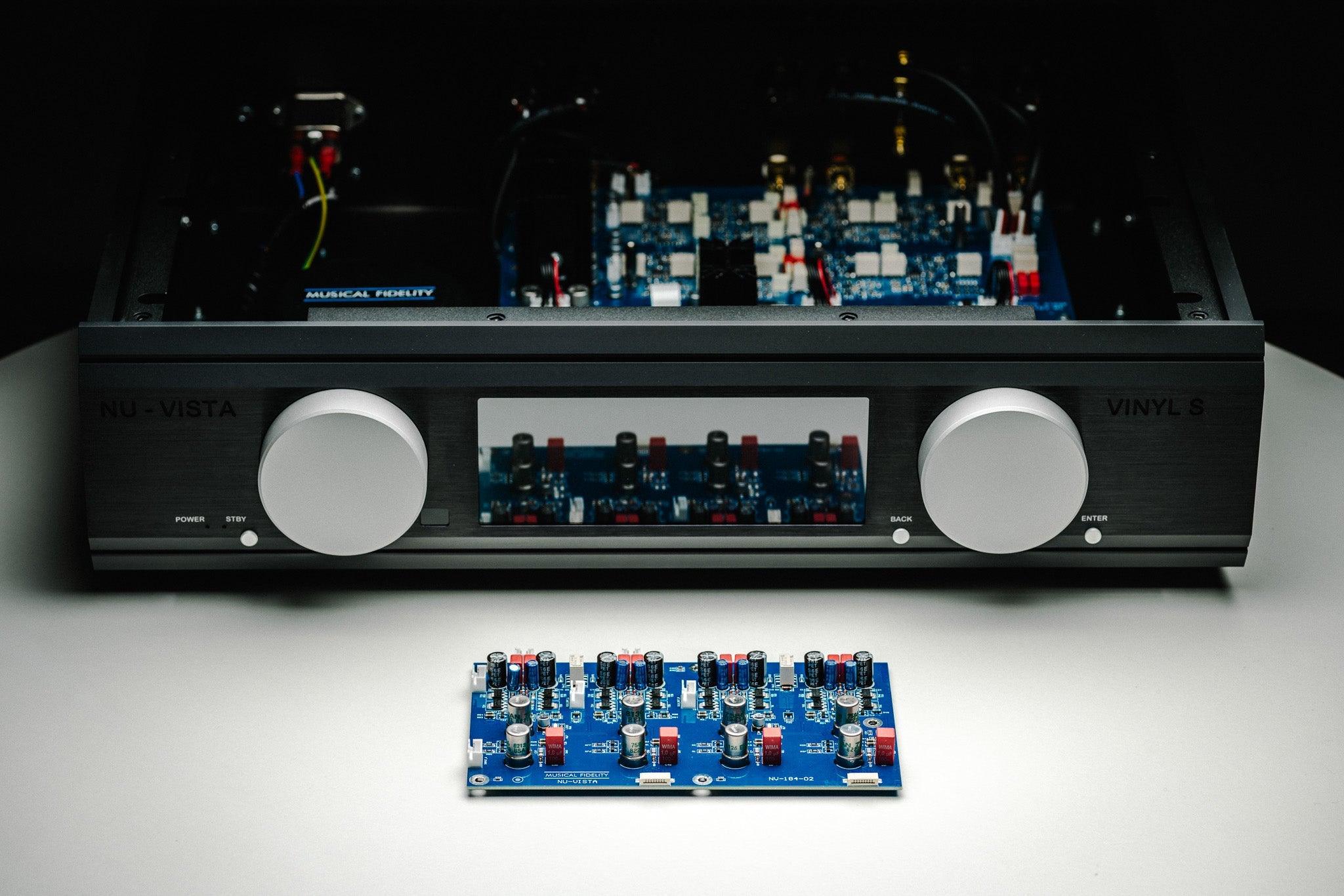
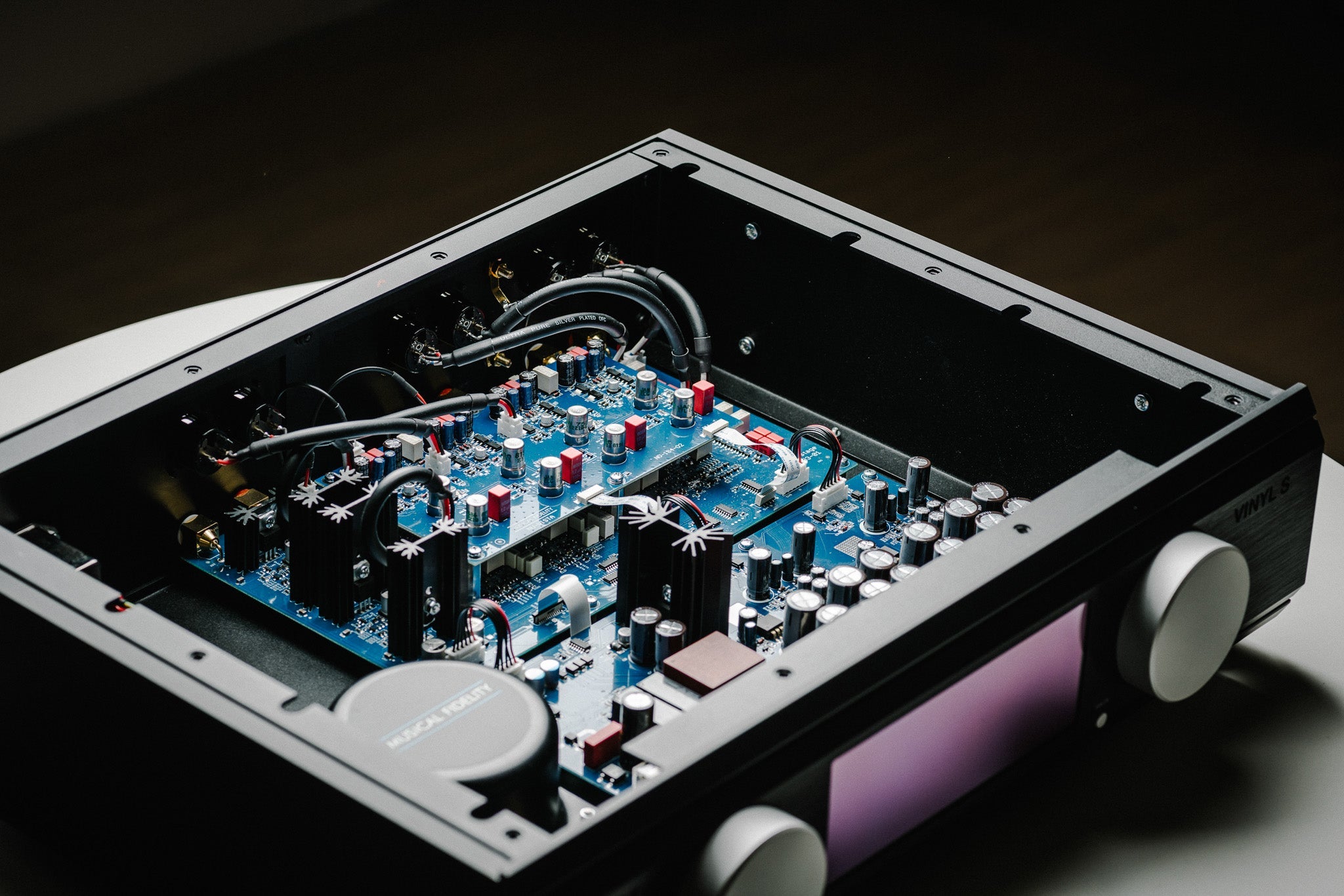
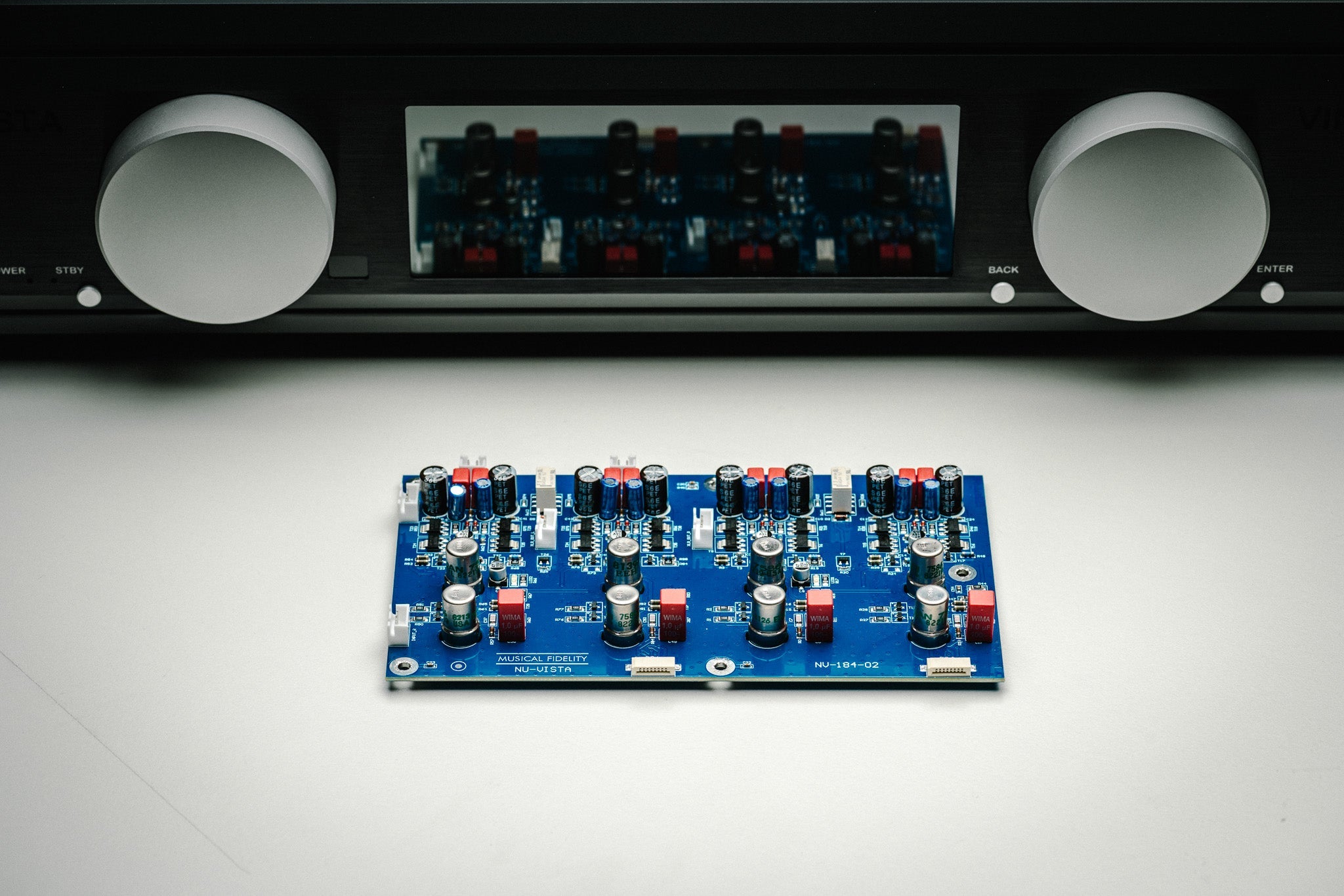
At the heart of the Vinyl S is the same circuit design and signature nuvistor Class A topology as the Nu-Vista Vinyl 2, which are the basis for the excellent sound quality of its larger sibling. The exact same technology has been made more cost-effective through intelligent PCB-level changes and component layout optimization, as well as a 45% reduction in mechanical size.
These changes have reduced the size and price of the device, while still retaining the luxurious feel and recognisable aesthetic identity of Musical Fidelity's legendary nuvistor products. The result is a refined example of high-end analogue performance, designed to deliver the same rich, dynamic and emotionally engaging sound that the Nu-Vista by Musical Fidelity brand is renowned for.
The Vinyl S perfectly complements the Nu-Vista 600.2 and Nu-Vista 800.2 integrated amplifiers and is a testament to our enduring commitment to craftsmanship, technology and emotional high-end sound quality – Musical Fidelity.
Technology
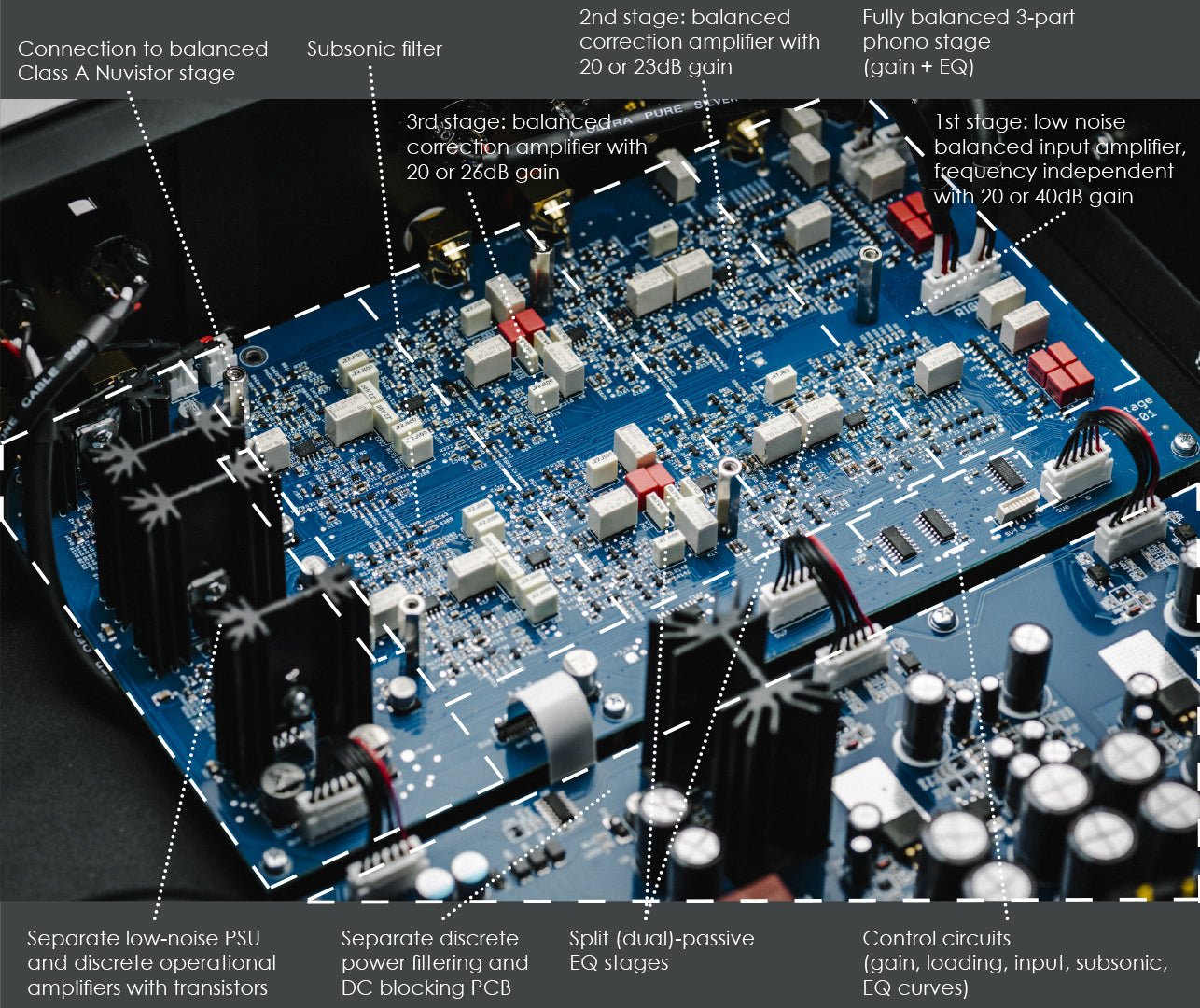
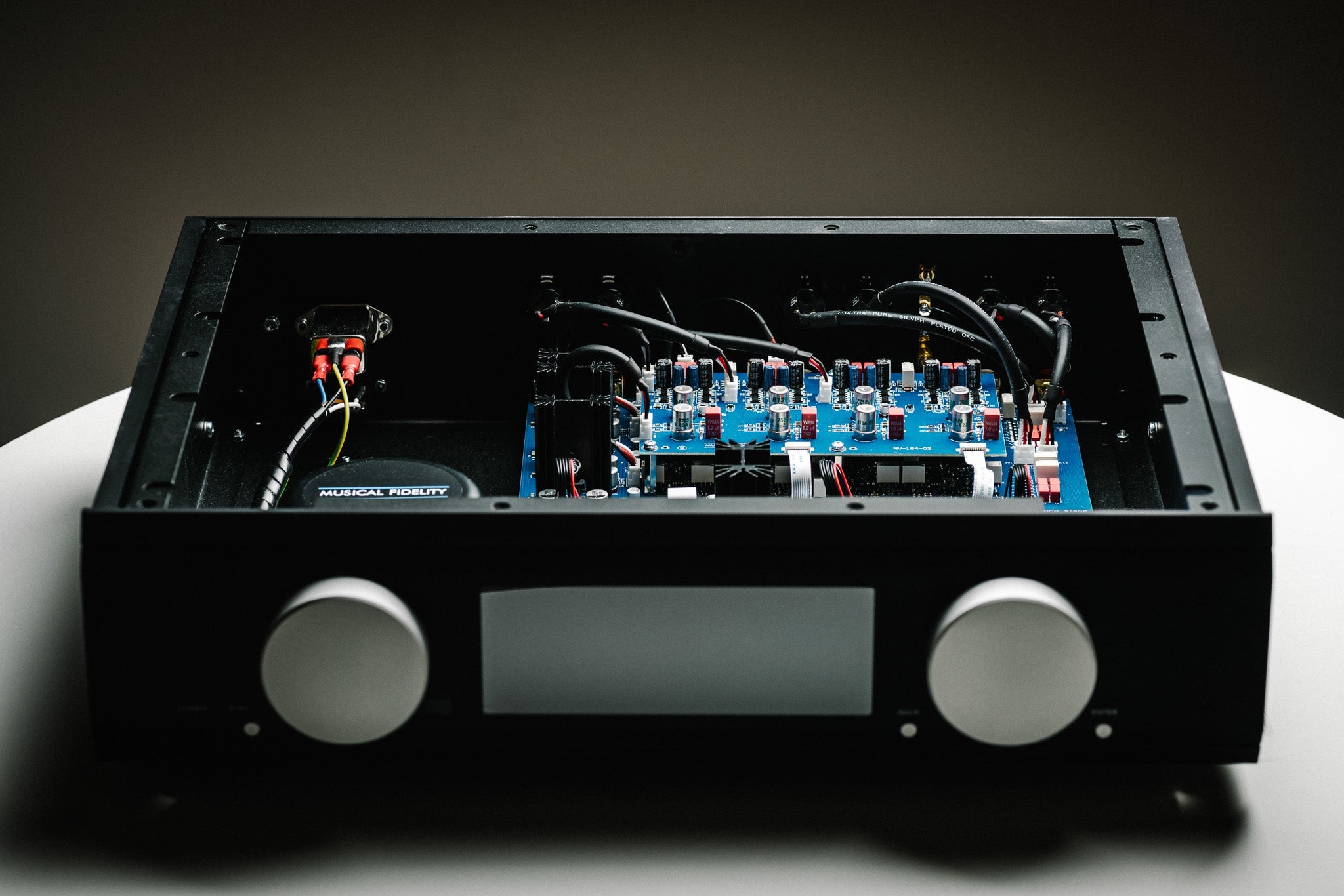
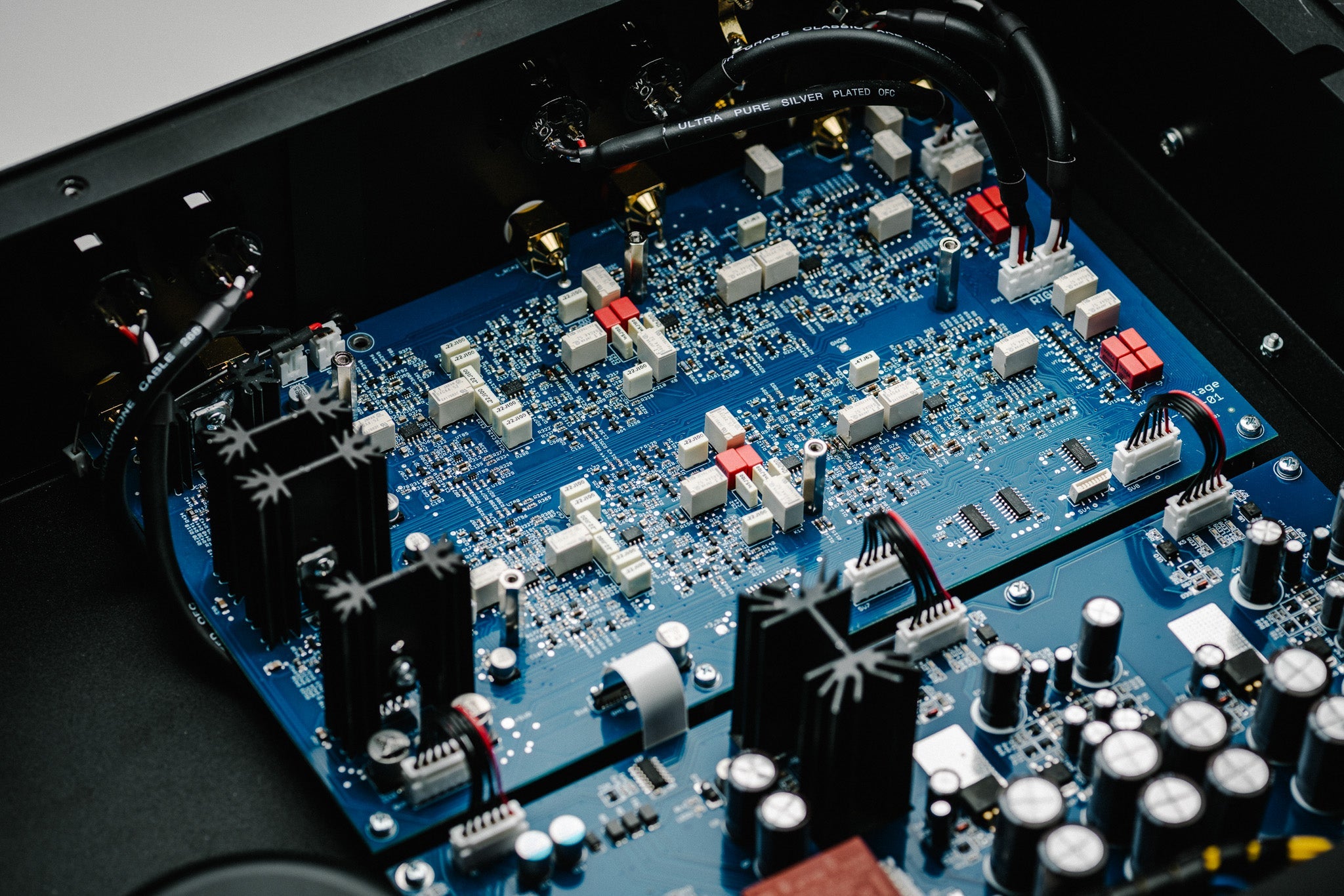
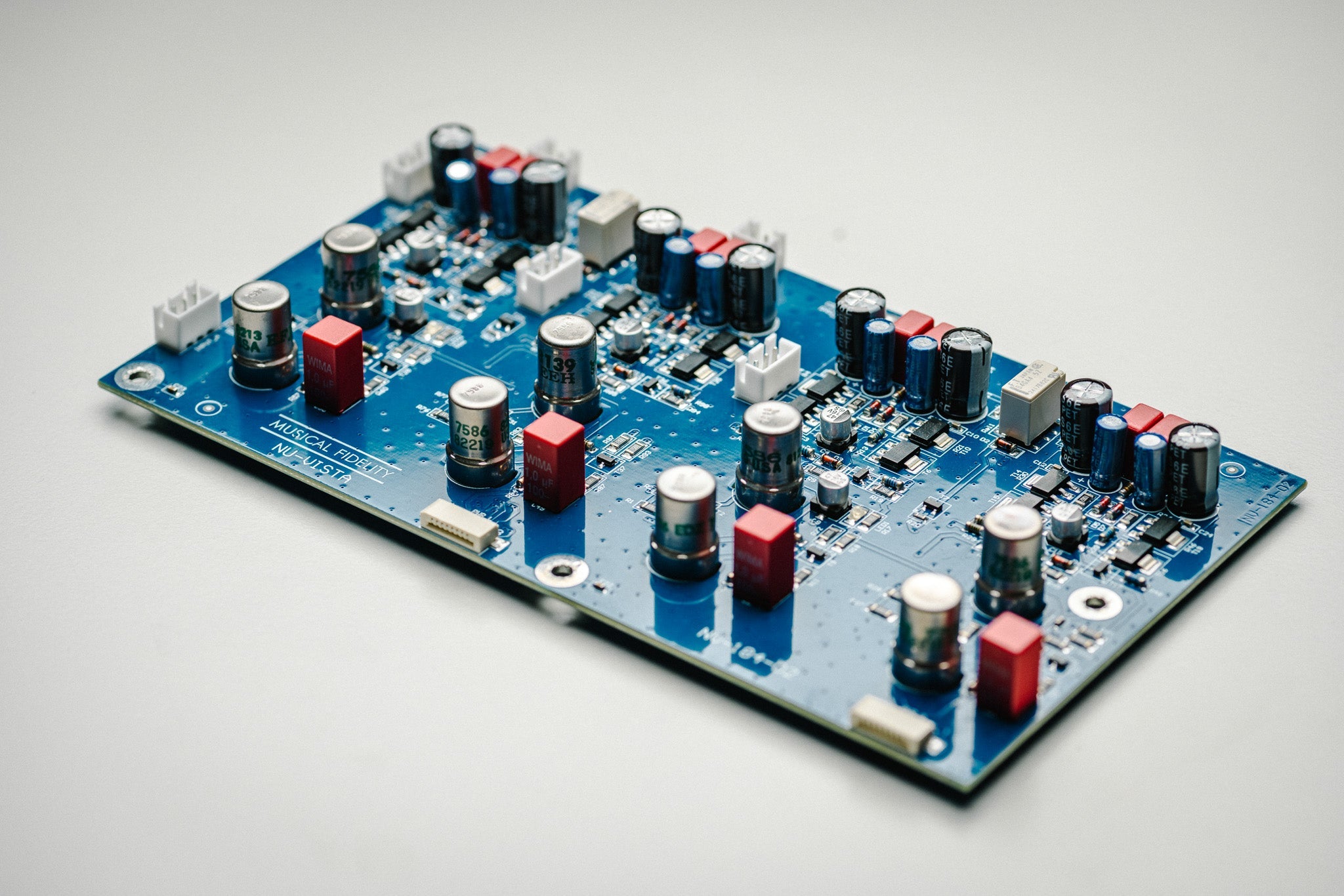
Just like the larger Nu-Vista Vinyl 2, the Vinyl S has a separate and fully balanced circuit design. The turntable preamplifier contains three amplification stages, which use fully discrete Class A transistor switching. The EQ stage also does not correct the bends. It is completely passive and implemented with two separate stages (split-passive) - this is a more expensive solution to design and implement, but ensures the most accurate RIAA correction possible. Split-passive equalization allows for better impedance matching and the smallest deviation from the ideal correction curve. In addition to the normal RIAA curve, we have also implemented the rarer DECCA and COLUMBIA correction curves. The signal from each channel of the turntable preamplifier goes to separate circuit boards, which have a fully balanced Class A Nuvistor stage implemented with separate components. Optimized circuit board component placement and purposeful design ensure minimal noise and distortion with a low output impedance.
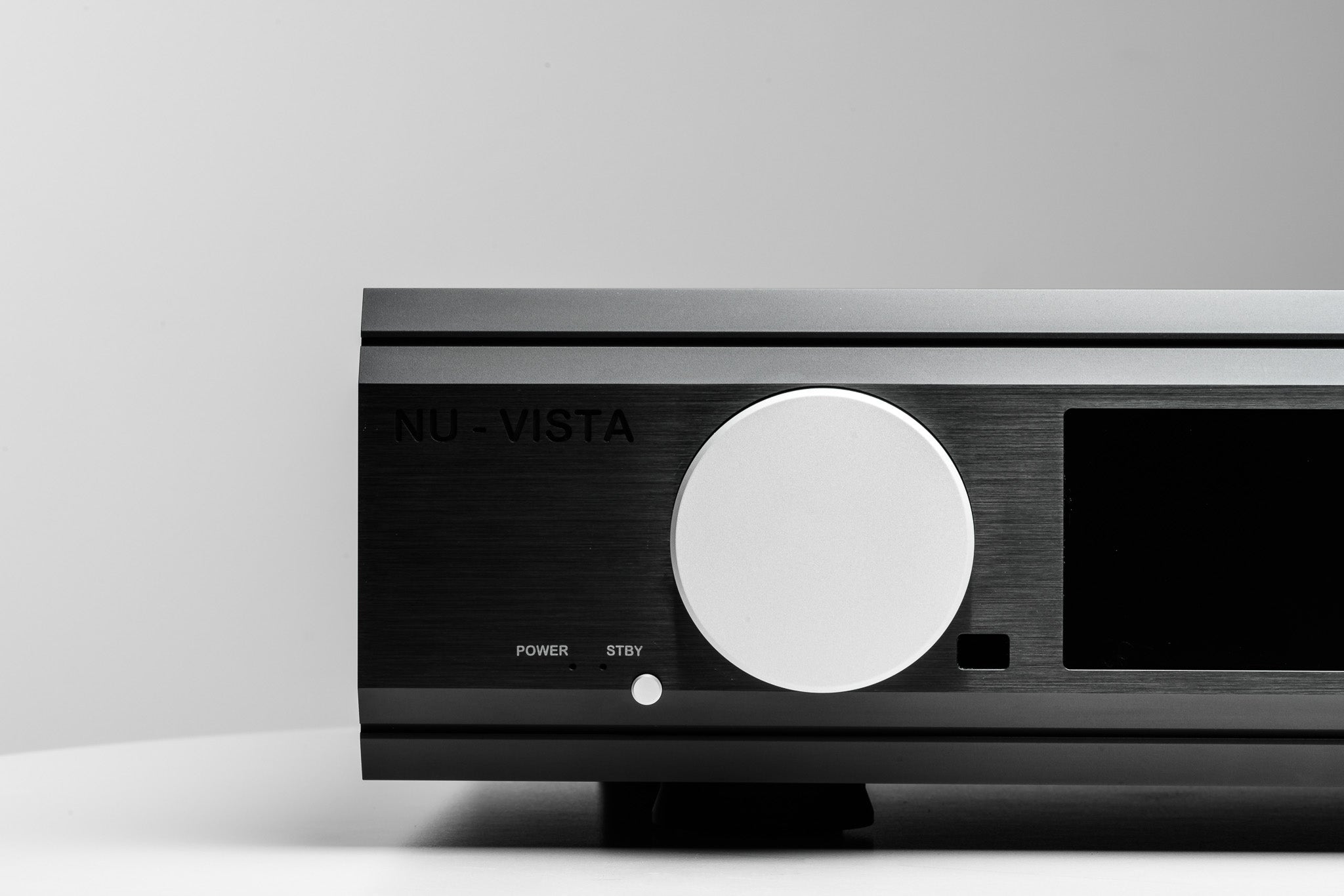
The RCA and XLR outputs both have their own separate stages, allowing them to be used simultaneously. The Nu-Vista Vinyl S uses the same display technology and redesigned front panel as all other new Nu-Vista S products.
Benefits of discrete circuits
A discrete circuit consists of components that are separate, individual parts and are therefore also called discrete components. These can be "passive" components, such as resistors, capacitors and inductors, as well as "active" components, such as transistors. The opposite of this would be an integrated circuit (IC = chip), which can be used, for example, as an operational amplifier (Op-Amp) in the signal chain.
The hi-fi industry uses specialized IC operational amplifiers built for audio applications, which allow for very small and cost-effective electronics and save designers time. However, countless hours of listening and years of experience have shown us that even the best ICs are generally not as neutral, natural, dynamic or vibrant as discrete circuits – all of which are characteristics of Musical Fidelity’s “sound”. IC electronics are also difficult – if not impossible – to repair. For these reasons, we have retained our passion for traditional, discrete designs.
Truly fully balanced
The fully balanced design used in the Nu-Vista Vinyl S utilizes two signals in opposite phases (also known as + and -). Both the + and – signals carry the same musical information. A truly balanced amplifier separates the final musical information from the +/- signals, while canceling out any noise and interference that may occur during transmission.
A "quasi-balanced" amplifier does not process the + and - signals separately, but sums them together before processing them. Quasi-balanced design does not provide the advantages of truly balanced connections and is used as a cheap substitute. In a truly, or fully balanced, device, the + and - parts of both the left and right channels are processed separately, which doubles the amplifier section: it is effectively two amplifiers. You need twice the space on the circuit board, twice the number of components and twice the care in designing the circuit board layout. Nu-Vista Vinyl S is excellent at suppressing unwanted noise, errors and interference and offers the best possible signal-to-noise ratio.
Complete voice box fitting options
Each of the Vinys S's RCA or balanced XLR inputs can be individually adjusted for either MM/MC type cartridges and each with its own matching values. Each input remembers its own settings.
The gain is very widely selectable from 40 dB (voltage gain 100x) to 69 dB (voltage gain 3690x). The gain selection is done without interference by signal relays, and it is precisely the high gains that are the reason why a turntable preamplifier must be as quiet as possible (a fully balanced design is of great importance here) in order to handle such high gain levels. The input capacitance and impedance are switched using JFET transistors. This expensive but technically very sophisticated implementation allows the Nu-Vista Vinyl S to be optimally matched to any cartridge and to be perfectly integrated into the rest of your hi-fi system.
Thanks to these criteria, the Nu-Vista Vinyl S performs perfectly, just like its bigger sibling. It is practically noise-free even at the highest gain levels. It is also almost completely distortion-free. You cannot overload its input or output, and you can adjust it perfectly to your sound box. It allows the musician's thoughts, feelings and skill to truly come out of the record.
While typical integrated circuit turntable preamps have a few dozen or hundreds of components, discrete designs consist of hundreds or thousands of components. This means a longer and more demanding design process, but we believe it offers the best value for your money.
Power supply
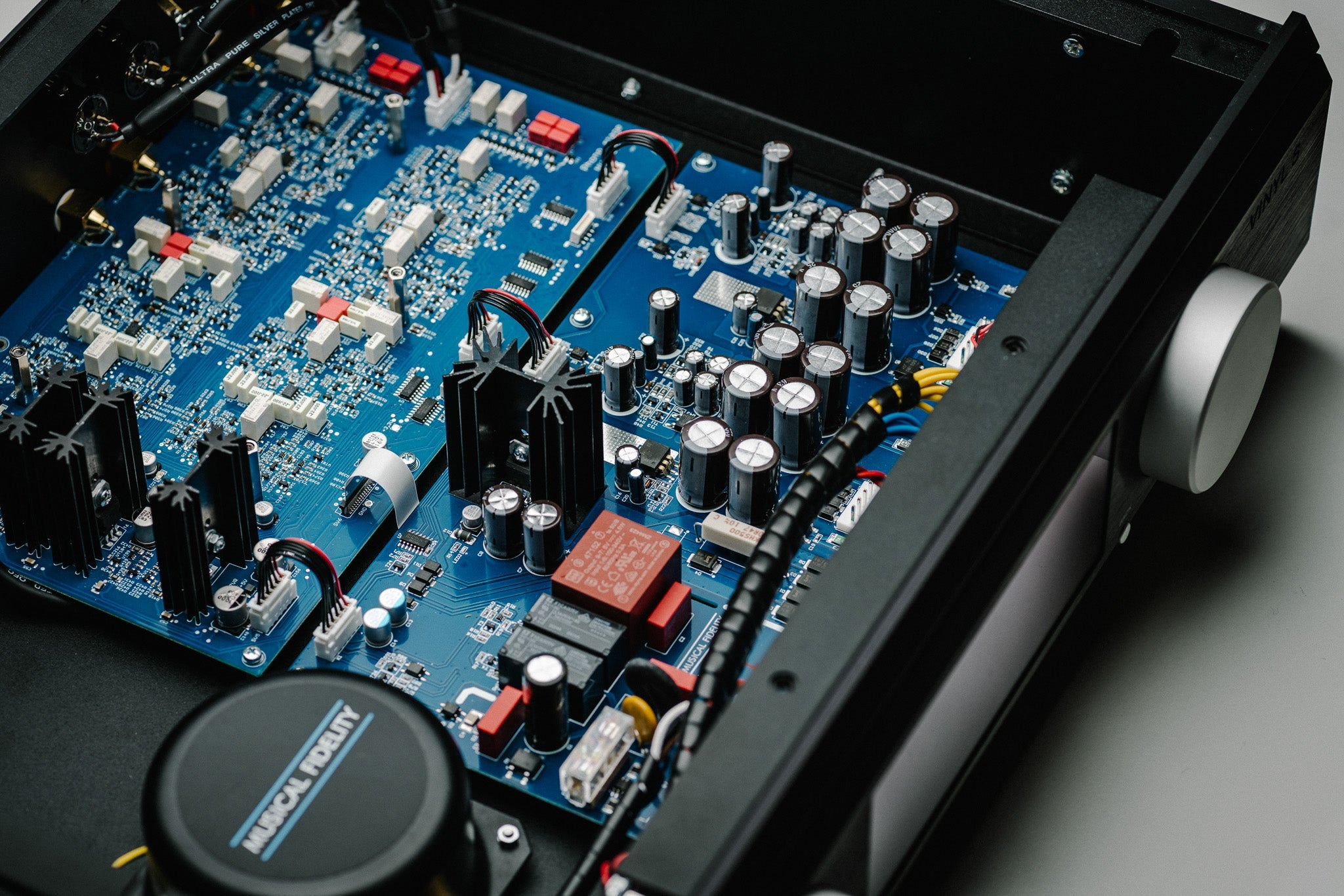
The Nu-Vista Vinyl S is a testament to our development work in the field of super silent power transformers. Industrial-grade connectors with EMI filtering and DC blocking prevent interference and eliminate transformer hum. The encapsulated toroidal transformer is specially designed for sensitive turntable signals: it has low core saturation and very low electromagnetic emissions.
Each separate amplifier stage has a DC servo to ensure it is in its optimal DC state. The preamp is powered by two high-quality symmetrical, low-noise power supplies, one for each channel. All fully balanced Nuvistor power supplies are passively filtered and regulated. When starting from a few hundred microvolts from a turntable cartridge, everything counts; every decibel of signal-to-noise ratio is crucial.
No compromise on structure
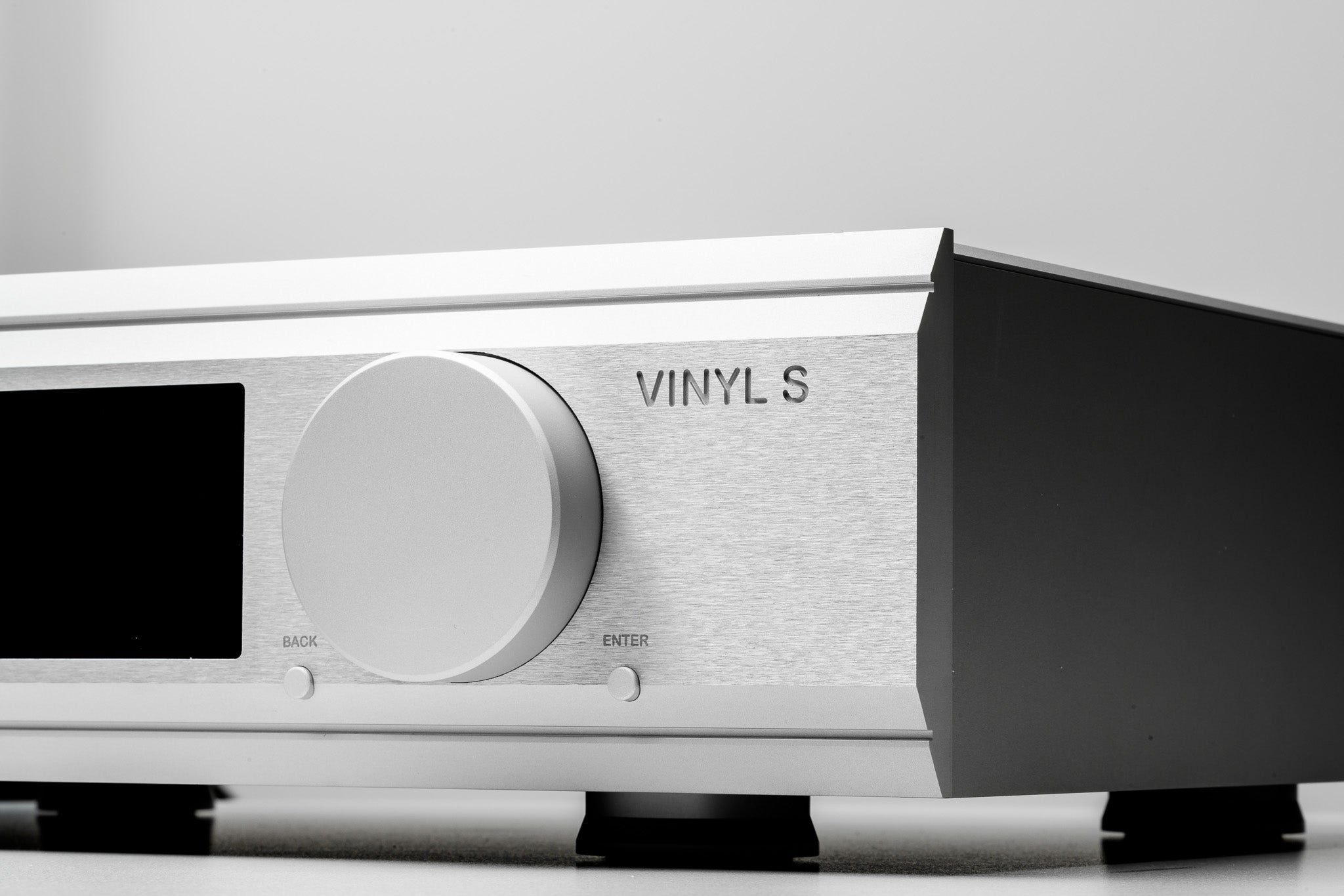
As is customary with Nu-Vista products, the mechanical construction of the Vinys S is also uncompromisingly rigid and robust. This is part of the typical Musical Fidelity philosophy. The Nu-Vista Vinyl S has a new, lower "S" frame: together with internal structures and circuit board optimizations, we have achieved a 45% smaller physical size.
Although the Nuvistor tubes are not visible from the outside and there is no LED backlight, the Nu-Vista Vinyl S is as luxuriously stylish as its sister and brings the Nuvistor-based tube turntable preamp to a new price range. It is a perfect match for integrated amplifiers such as the Nu-Vista 600.2 and Nu-Vista 800.2.
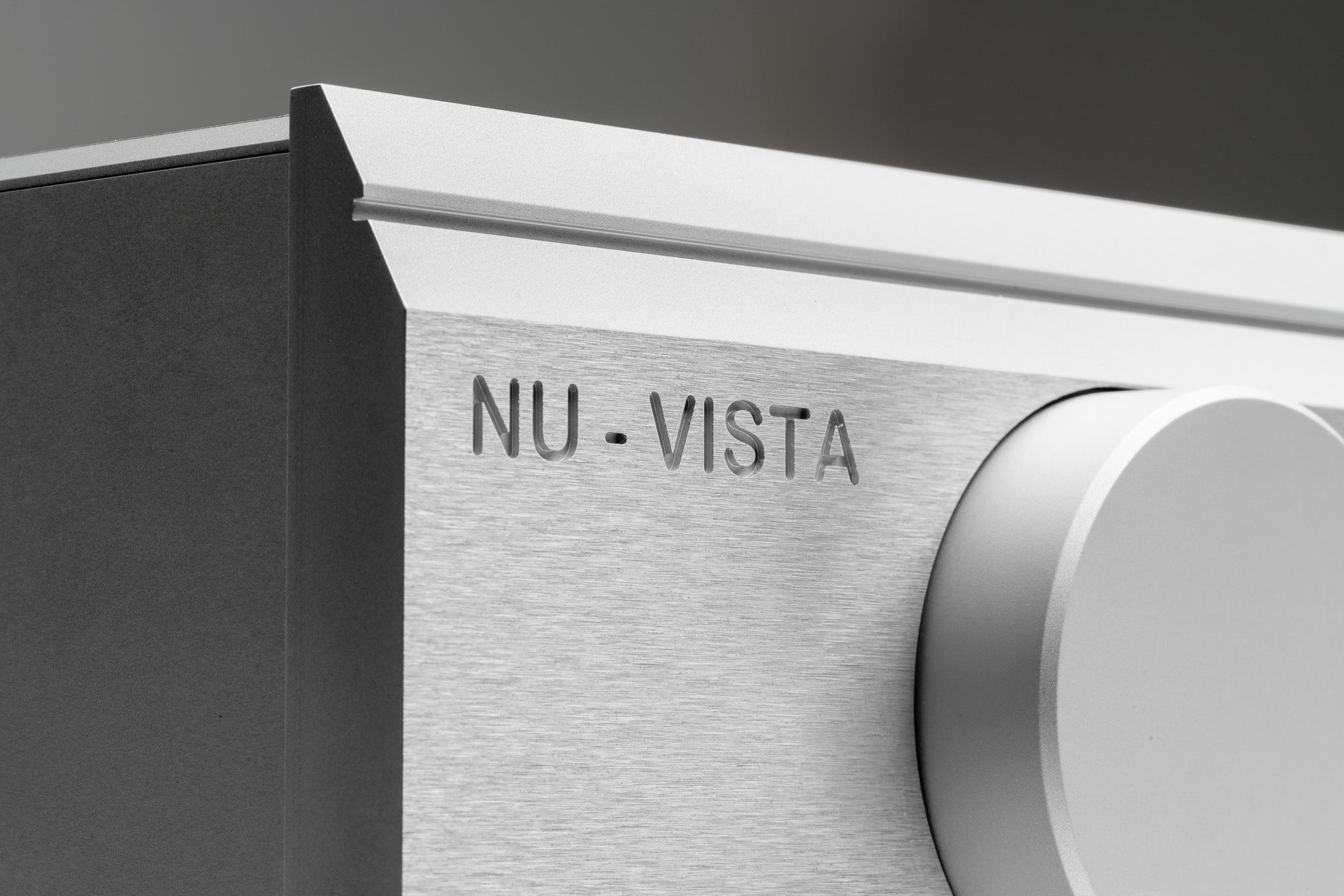
The front panel and side panels are machined from a very solid aluminum profile. The Nu-Vista Vinyl S is practically immune to the effects of environmental vibrations. The same can be said about its electromagnetic interference immunity: the solid aluminum housing acts as a Faraday cage. It effectively protects the incredibly sensitive internal components of the turntable preamplifier from external electromagnetic fields.
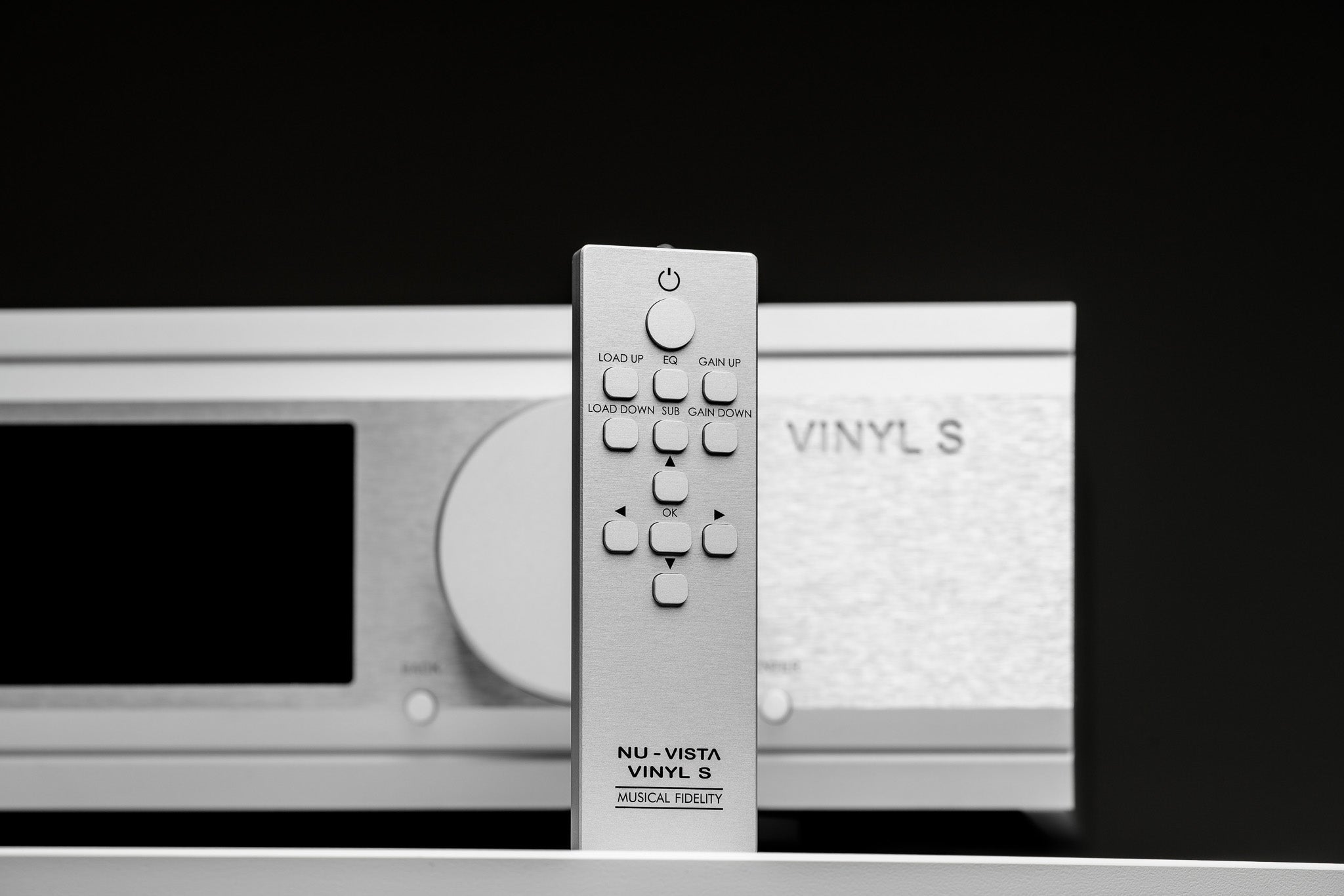
Also new is the streamlined “S” remote control, which is also machined from solid aluminum and fits perfectly with the sleek new style of turntable preamps.
Nu-Vista by Musical Fidelity
The Nu-Vista family is the fruit of a continuous effort by Musical Fidelity. The brilliant Nuvistor tube never really caught on in audio, with transistors arriving around the same time. It wasn’t until the early 1990s that Antony Michaelson and his small company Musical Fidelity – then based in a crafts village called Wembley, west of London – began manufacturing Nuvistor amplifiers. They were produced in limited editions and always sold out almost immediately. To this day, these icons of audio individuality are still highly regarded. Now that Musical Fidelity has moved to new ownership, our vision is to continue making history: the Nu-Vista Vinyl S is one example of this. We hope you enjoy listening to it as much as we enjoyed creating it!
Nu-Vista Vinyl S in brief
- Same technical design as Vinyl 2, but with a redesigned preamplifier circuit board and nuvistor tube layout to reduce size and cost
- Fully balanced and discrete design
- 3-stage amplification with Class A circuit boards
- Shared passive RIAA, DECCA and COLUMBIA equalizer
- Two-stage subsonic filter (switchable: OFF – Mild – Normal)
- Low-noise Nu-Vista Class A circuit
- 8 x 7586 nuvistors in a balanced buffer circuit
- MM (40, 43 dB) and MC (60, 63 dB) compatible, +6 dB option for each gain setting
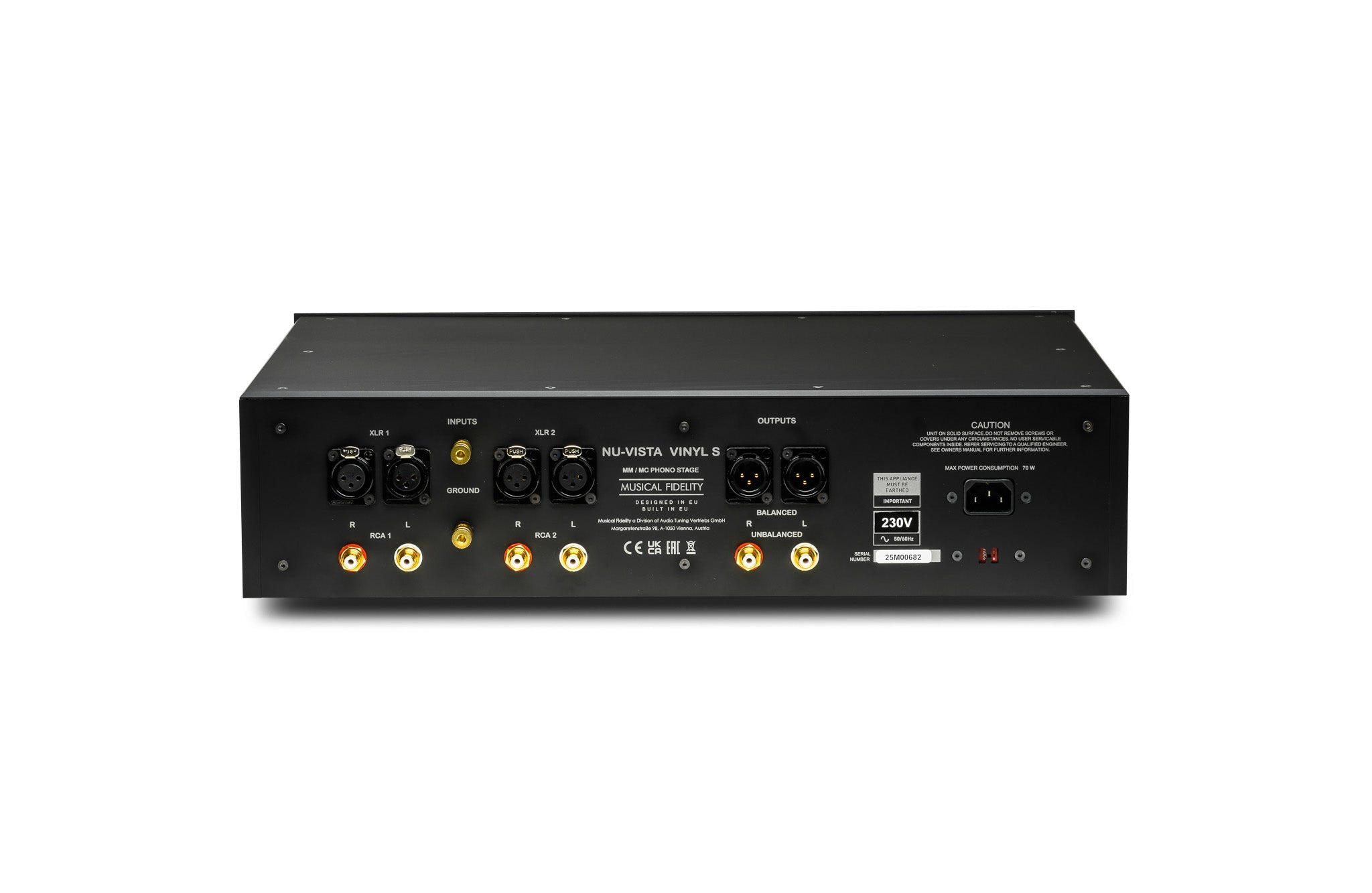
- Separate output and input stages - connect multiple inputs and outputs simultaneously
- Super quiet power transformer
- Discrete power supply filtering and DC blocking circuit
- 2 x RCA inputs
- 2 x balanced XLR inputs
- 1 x RCA output
- 1 x balanced XLR output
- Low profile Nu-Vista S enclosure design
- Approximately 45% smaller mechanical footprint
- Color display with charging settings and clearly displayed selected input
- Charging settings saved for each input
- Dimmable display
- Nu-Vista slim "S" remote control
Nuvistor tubes
Nuvistor tubes were invented in the 1950s to overcome many of the shortcomings of traditional tubes. Unlike them, Nuvistor tubes offer very good reliability, low microphonics, low noise, batch-to-batch consistency, small size, relatively low power consumption, and excellent technical performance.
One famous application was the Ampex MR-70, an expensive studio recorder whose entire electronics were based on nuvistors. Another well-known application for this very small tube was the studio-grade microphones of that era, the AKG/Norelco C12a, which used the nuvistor 7586 tube.
It was later also utilized in the famous Neumann U 47 studio microphone. This microphone was highly regarded by artists around the world and was used by many top artists such as Frank Sinatra, The Beatles and so on. It is noteworthy that currently a U47 microphone with stand, cables and power supply can be found on eBay for $10,999 with a "Buy It Now" price.
Unfortunately, just as the potential uses of Nuvistor tubes were being explored, the transistor was invented and the Nuvistor tube was "game over". That was until around thirty years ago when Musical Fidelity created its first groundbreaking Nu-Vista line of products. These legendary, limited edition products sold out within months. Today, even decades later, they are very expensive second-hand due to their beautiful sound, build quality and longevity.
SPECIFICATIONS:
World Cup
- Gain on XLR outputs: 40dB, 43dB, 46dB, 49dB
- Frequency response: +0.25dB, -0.25dB
- Input sensitivity: 5mV IN to 500mV OUT (40dB, 1kHz)
- Input impedance: 47kohms
- Input capacitance: 50-400pF selectable
- THD at 1kHz: <0.005%
- Overload margin: 32dB
- Signal-to-noise ratio: >101dB „A“-wt. at 40 dB
MC
- Gain on XLR outputs: 60 dB, 63 dB, 66 dB, 69 dB
- Frequency response: +0.3 dB, -0.3 dB
- Input sensitivity: 500 uV IN to 500 mV OUT (60 dB, 1 kHz)
- Input impedance: 5 ohms to 47 kohms selectable
- Input capacitance: 400 pF fixed
- THD at 1 kHz: <0.008%
- Overload margin: 32 dB
- Signal-to-noise ratio: >82 dB at "A"-wt. 60 dB
Features
- Equalizer curves: RIAA, DECCA, COLUMBIA
- Subsonic filters: off, mild (IEC), standard (at 20 Hz 18 dB/octave)
Input and output connections
- Input connections: 2x RCA, 2x XLR
- 1x RCA output: single ended, left and right 500 mV nominal voltage, 10 V max.
- 1x XLR output: balanced, left and right 1 V nominal voltage, 20 V max.
Power requirements
- Mains voltage: 115/230 VAC 50/60 Hz (factory setting); 100 VAC 50/60 Hz (optional)
- Consumption: Maximum 40 watts, <0.5 W in standby mode (orange LED on)
General information
- Dimensions (W x H x D): 483 x 131 x 404 mm
- Weight: Net weight 14 kg / 18.6 kg in shipping box
